End-Stage Dementia: Signs, What to Expect, and Comfort Care at Home
Reviewed for accuracy by Julian O’Campo, Founder of Lux Senior Care · Last reviewed
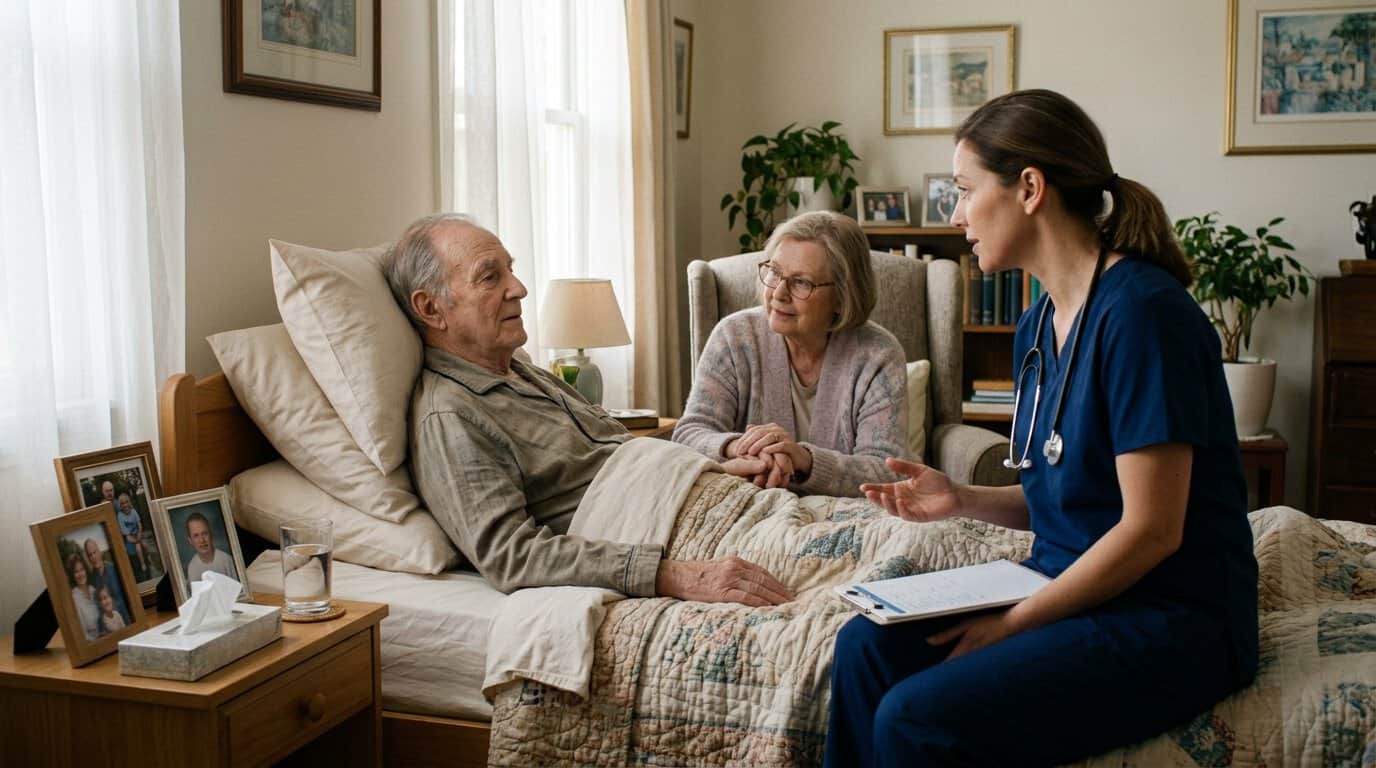
End-stage dementia, also called late-stage or stage 7 dementia, is the final stage of the disease. A person in this stage needs help with nearly all daily care, speaks very little, and often has trouble walking, sitting up, and swallowing. Care focuses on comfort, dignity, and closeness, often with hospice support.
Key facts
- On average, a person with Alzheimer’s lives four to eight years after diagnosis, and some live as long as 20 years (Alzheimer’s Association).
- The late stage of Alzheimer’s usually requires intensive care, and the caregiver’s role focuses on preserving quality of life and dignity (Alzheimer’s Association).
- The American Geriatrics Society does not recommend feeding tubes for older adults with advanced dementia and recommends careful hand or spoon feeding instead (Health in Aging).
- Medicare’s hospice benefit covers comfort-focused care for people with a life expectancy of six months or less, and hospice care costs $0, apart from small copays for prescriptions and inpatient respite care (Medicare.gov).
Watching someone you love reach the final stage of dementia is one of the hardest parts of caregiving. Knowing what to expect can’t take the sadness away, but it can help you make decisions with less fear, recognize when to ask about hospice, and put your energy into comfort.
This guide explains the signs of end-stage dementia, what the final stage can look like, how hospice and palliative care help, and practical ways to keep your loved one comfortable at home.
Get Your Free Consultation
Complete the Form Below and We’ll Get Back to you Immediately.
What is end-stage dementia?
End-stage dementia is the last stage of a progressive dementia, such as Alzheimer’s disease. On the 7-stage Global Deterioration Scale that many doctors use, it is stage 7, very severe cognitive decline. Clinicians often use the Functional Assessment Staging Tool (FAST) to describe the steps within this stage:
| FAST stage | What it looks like |
|---|---|
| 7a | Speech limited to about a half-dozen words in a day |
| 7b | Speech limited to a single word |
| 7c | Can no longer walk without help |
| 7d | Can no longer sit up without help |
| 7e | Can no longer smile |
| 7f | Can no longer hold up the head |
Not everyone passes through every step, and the timing varies. See how this stage fits into the whole journey in our guide to the stages of dementia.
Signs of end-stage dementia
- Speaking only a few words, or none
- Needing help with eating, bathing, dressing, and toileting
- Being unable to walk, and later unable to sit up, without help
- Trouble swallowing, or coughing and choking with food or drinks
- Loss of bladder and bowel control
- Weight loss
- Sleeping most of the day
- Frequent infections, such as pneumonia or urinary tract infections
- Not recognizing family members, while still responding to touch, voices, and music
What are the final stages of dementia? What to expect
The final stage usually unfolds in steps rather than a smooth slope. A person may seem stable for weeks, then decline after an infection or a fall. How long this stage lasts varies widely, from weeks to a year or more.
As the disease advances, the goal of care often shifts from treating every problem to keeping your loved one comfortable. Families may face decisions about hospital transfers, antibiotics, and feeding. This is a good time to revisit advance directives and talk with the doctor about your loved one’s wishes and goals of care.
When is hospice recommended for dementia?
Hospice is recommended when a doctor believes a person’s life expectancy is six months or less if the illness runs its normal course, and the person or family wants to focus on comfort rather than cure (Medicare.gov). You can ask for a hospice evaluation at any time; it doesn’t commit you to hospice.
What qualifies a dementia patient for hospice?
Hospice providers commonly use guidelines that look for stage 7 on the FAST scale, meaning the person can’t walk, dress, or bathe without help, is incontinent, and speaks only a few words, along with complications in the past year such as aspiration pneumonia, serious infections, pressure injuries, or significant weight loss. The hospice physician makes the final decision.
Hospice care for dementia
Hospice care for dementia brings a team to wherever your loved one lives: nurses, hospice aides for bathing and personal care, a social worker, a chaplain, and volunteers. It provides medications for comfort, a hospital bed and other equipment, supplies, and a nurse you can call 24/7. Hospice doesn’t usually include round-the-clock caregivers, though. Read does hospice provide 24-hour care at home? to plan for the hours between visits.
Palliative care for dementia
Palliative care focuses on comfort and quality of life at any stage of a serious illness, and it can be provided alongside other treatment. Hospice is palliative care for the last months of life, when the focus is fully on comfort. Palliative care for dementia can help with symptoms such as pain, agitation, and sleep problems, and with planning ahead. Ask your loved one’s doctor about a palliative care referral, or read our guide to palliative care at home.
Comfort care at home: a practical guide
Small, steady acts of care make the biggest difference in the final stage. The hospice nurse can show you how to do each of these safely.
Moving and skin care
Change your loved one’s position as often as the nurse advises, often every couple of hours, to protect the skin. A pressure-relieving mattress helps. Keep skin clean and dry, and check the heels, hips, and tailbone for redness.
Mouth care
Gently clean and moisten the mouth and lips with a soft swab, and use lip balm. Mouth care keeps your loved one comfortable, especially as eating and drinking decline.
Eating and drinking
Offer small bites and sips slowly, with your loved one sitting upright. Soft foods and thickened liquids may be easier to swallow. Stop if they cough, choke, or turn away. It is natural for appetite to fade near the end of life, and careful hand feeding is recommended over feeding tubes for people with advanced dementia (Health in Aging). For more ideas, read why ice cream can help with dementia and what to do when a dementia patient is not eating.
Recognizing pain
People with end-stage dementia often can’t say they hurt. Watch for grimacing, moaning, restlessness, rapid breathing, guarding a part of the body, or resisting care. Nurses use observation tools, such as the PAINAD scale, to assess pain in advanced dementia. Tell the hospice nurse about any signs of discomfort.
Bathing and personal care
Keep bathing gentle and brief. A warm room, a bed bath or towel bath, and a calm voice help. In-home bathing assistance from a trained caregiver can make personal care safer and more comfortable for everyone.
Comfort for the senses
Familiar music, soft voices, gentle touch, a hand massage, familiar scents, and family photos can bring calm. Keep the room quiet, with soft lighting.
When skilled care is needed
Some needs call for a nurse, such as managing symptoms or caring for wounds between hospice visits. A private duty nurse or registered nurse services at home can help alongside the hospice team.
What does “transitioning” mean in hospice?
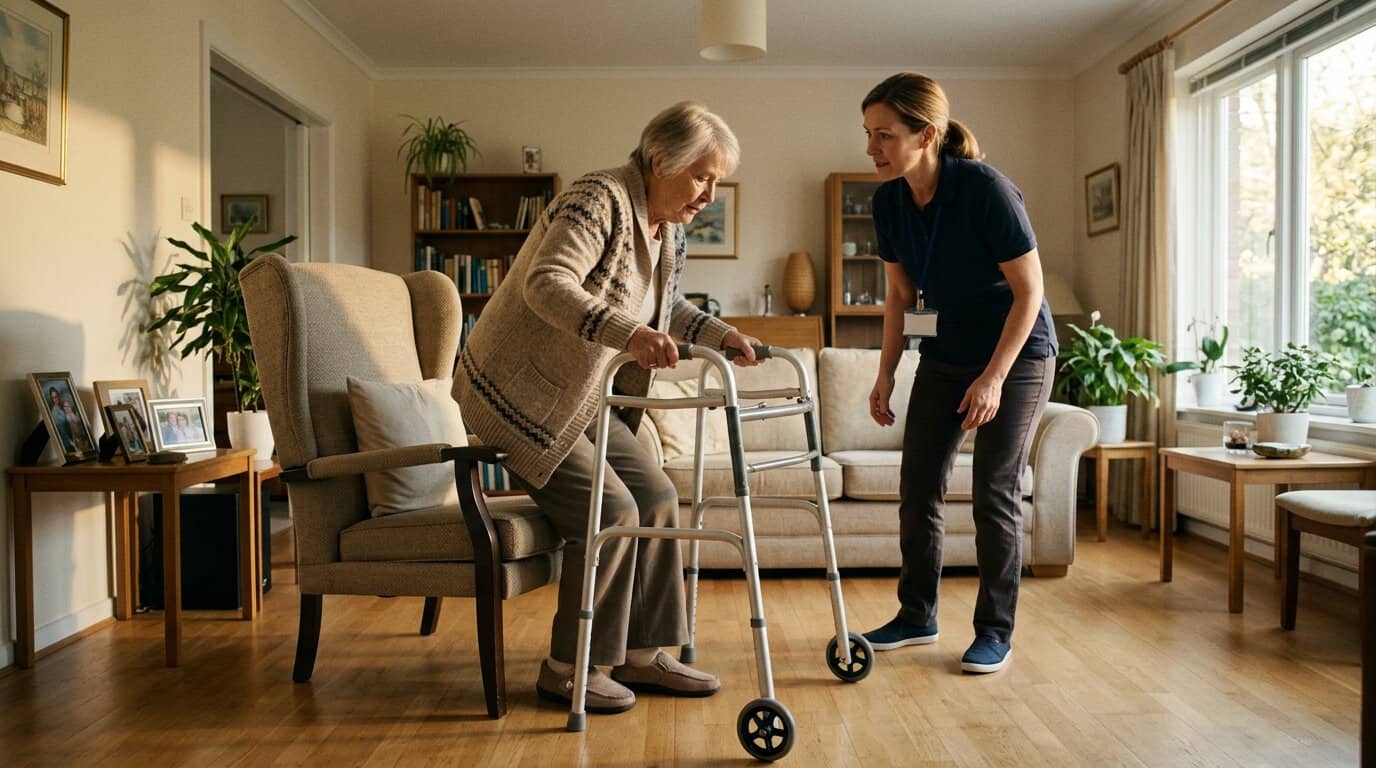
In hospice, transitioning usually describes the period when a person’s body begins to shut down, often in the last days or weeks of life. Common signs include:
- Sleeping more and responding less
- Eating and drinking very little, or not at all
- Changes in breathing, such as pauses, irregular breaths, or a rattling sound
- Cool hands and feet
- Mottled or bluish skin on the knees, feet, or hands
- Less urine
- Restlessness, or picking at the sheets
The hospice team will explain what you are seeing and how to keep your loved one comfortable. Many hospice teams encourage families to keep talking softly, since hearing may continue even when a person doesn’t respond.
Support for the family
Many families feel grief long before a death, along with exhaustion, guilt, and sometimes relief. All of these feelings are normal. Share the load where you can, and accept help when it is offered.
Hospice offers a social worker, a chaplain, and grief support. Regular breaks at home help, too: learn about respite care in Palm Beach County, or take the caregiver burnout quiz. If difficult feelings have built up, you are not alone; read my husband has dementia and I hate him.
Lux Senior Care is a Florida-licensed nurse registry serving Palm Beach, Martin, St. Lucie, Indian River, and Okeechobee Counties. We refer pre-screened, independent caregivers for comfort care at home, including overnight and 24-hour home care. Learn more about Alzheimer’s and dementia care.
Frequently asked questions
It varies widely, from weeks to a year or more. Infections, eating problems, and other health conditions affect the timeline. The doctor or hospice team can give the best guidance for an individual.
Common signs include sleeping most of the time, eating and drinking very little, changes in breathing such as pauses or a rattling sound, cool hands and feet, and mottled skin. The hospice team can explain each change and how to keep your loved one comfortable.
Yes. Many people with end-stage dementia are cared for at home, usually with hospice support and help from family or private caregivers. Round-the-clock care, the right equipment, and a plan for nights make it possible.
The American Geriatrics Society does not recommend feeding tubes for older adults with advanced dementia and recommends careful hand feeding instead. Families should discuss the person’s wishes and goals of care with the doctor.
Hospice guidelines for dementia commonly look for stage 7 on the FAST scale, meaning the person cannot walk, dress, or bathe without help, is incontinent, and speaks only a few words, plus complications such as pneumonia, serious infections, or significant weight loss. The hospice physician decides eligibility.
Yes. Sleeping more is common in late-stage dementia as the body weakens. A sudden change in sleep or alertness can also signal an infection or other illness, so tell the doctor or hospice nurse about new changes.
You don’t have to cover every hour alone
If you are caring for someone in the final stage of dementia, a referred caregiver can help with comfort care, overnight presence, and the hours between hospice visits. Lux Senior Care can refer pre-screened, independent caregivers for a few hours, overnight, or around the clock.